Buy a Custom Home Chinese or Japanese Calligraphy Wall Scroll
We have many options to create artwork with the Chinese characters / Asian symbols / Japanese Kanji for Home on a wall scroll or portrait.
If you want to create a cool Home wall scroll, this is the place. Below you will find a few Asian symbols that express the idea of Home.
3. Any success can not compensate for failure in the home
8. Feel at Ease Anywhere / The World is My Home
11. Home of the Auspicious Golden Dragon
12. Home is where the heart is
14. There’s No Place Like Home
16. Welcome Home
Family / Home
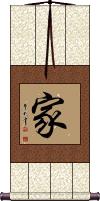
家 is the single character that means family in Chinese and Japanese.
It can also mean home or household depending on context.
Hanging this on your wall suggests that you put “family first.”
Pronunciation varies in Japanese depending on context. When pronounced “uchi” in Japanese, it means home, but when pronounced “ke,” it means family.
 Note that there is an alternate form of this character. It has an additional radical on the left side but no difference in meaning or pronunciation. The version shown above is the most universal, and is also ancient/traditional. The image shown to the right is only for reference.
Home is where the heart is
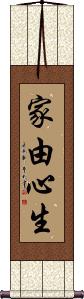
家由心生 is an old Chinese proverb that is roughly equal to the English idiom “Home is where the heart is.”
If you know Chinese, you may recognize the first character as home and the third as the heart.
Any success can not compensate for failure in the home
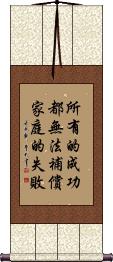
所有的成功都無法補償家庭的失敗 is a Chinese proverb that can be translated into English as “No success can compensate for failure in the home.”
Also, the word “home” can be exchanged with “family.”
Blessings on this Home
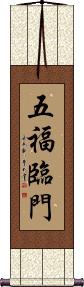
五福臨門 means “five good fortunes arrive [at the] door.”
It is understood to mean “may the five blessings descend upon this home.”
These blessings are known in ancient China to be: longevity, wealth, health, virtue, and natural death (living to old age). This is one of several auspicious sayings you might hear during the Chinese New Year.
Bless this House
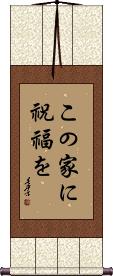
This means “Bless this house” or “Bless this home,” in Japanese.
Some may also translate this as “Bless this family,” since the Kanji for home can also mean family.
Note: Because this selection contains some special Japanese Hiragana characters, it should be written by a Japanese calligrapher.
House of Good Fortune
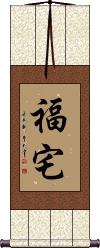
福宅 is perhaps the Chinese equivalent of “This blessed house” or perhaps “home sweet home.”
This phrase literally means “Good fortune house” or “Good luck household.” It makes any Chinese person who sees it feel that good things happen in the home in which this calligraphy is hung.
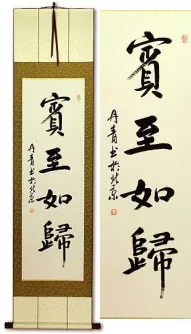
Make Guests Feel at Home
Home away from home
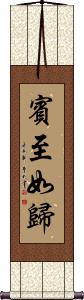
This Chinese phrase suggests that a good host will make guests feel like they are returning home or are as comfortable as they would be at their own homes.
賓至如歸 is also the Chinese equivalent of “a home away from home,” and is used by Chinese hotels, guest houses, and inns to suggest the level of their hospitality that will make you feel at home during your stay.
Feel at Ease Anywhere / The World is My Home
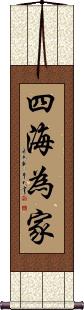
四海為家 literally reads, “Four Seas Serve-As [my/one's] Home.”
Together, 四海 which literally means “four seas” is understood to mean “the whole world” or “the seven seas.” It's presumed to be an ancient word from back when only four seas were known - so it equates to the modern English term, “seven seas.”
This can be translated or understood in a few different ways:
To regard the four corners of the world all as home.
To feel at home anywhere.
To roam about unconstrained.
To consider the entire country, or the world, to be one's own.
Home of the Black Dragon
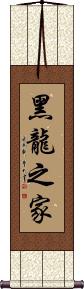
黑龍之家 was added by special request of a customer. This phase is natural in Chinese, but it is not a common or ancient title.
The first character is black.
The second is dragon.
The third is a possessive modifier (like making “dragon” into “dragon's”).
The fourth character means home (but in some context can mean “family” - however, here it would generally be understood as “home”).
Home of the Dragon
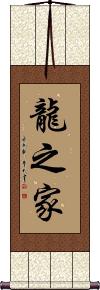
Added by special request of a customer. This phase is natural in Chinese, but it is not a common or ancient title.
The first character is dragon.
The second is a possessive modifier (like making “dragon” into “dragon's”).
The third character means home (but in some context can mean “family” - however, here, it would generally be understood as “home”).
Home of the Auspicious Golden Dragon
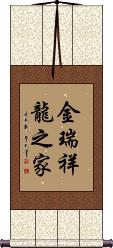
This 金瑞祥龍之家 or “home golden auspicious dragon” title was added by special request of a customer.
The first character means gold or golden.
The second and third characters hold the meaning of auspiciousness and good luck.
The fourth character is dragon.
The fifth is a possessive modifier (like making “dragon” into “dragon's”).
The last character means home (but in some context can mean “family” - however, here it would generally be understood as “home”).
Note: The word order is different than the English title because of grammar differences between English and Chinese. This phrase sounds very natural in Chinese in this character order. If written in the English word order, it would sound very strange and lose its impact in Chinese.
Note: Korean pronunciation is included above, but this has not been reviewed by a Korean translator.
Home is where the heart is
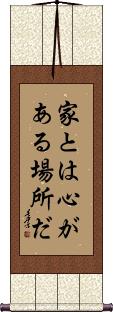
家とは心がある場所だ is, “Home is where the heart is,” in Japanese.
Most Japanese will take this to mean:
If you are with the person or at the place you love most, it becomes your true home.
Note: Because this selection contains some special Japanese Hiragana characters, it should be written by a Japanese calligrapher.
No Place Like Home
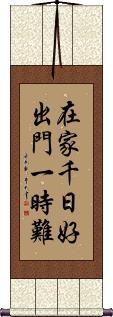
在家千日好出门一时难 is a Chinese proverb that literally means “At home, one can spend a thousand days in comfort but spending a day away from home can be challenging.”
Figuratively, this means “There's no place like home,” or roughly a Chinese version of “Home sweet home.”
There’s No Place Like Home
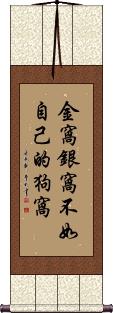
金窝银窝不如自己的狗窝 is a Chinese slang proverb that means “Golden house, [or a] silver house, not as good as my own dog house.”
It's basically saying that even a house made of gold or silver is not as good as my own home (which may only be suitable for a dog but at least it's mine).
No Place Like Home
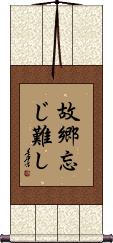
故郷忘じ難し is a Japanese proverb that means “there is no place like home” or “home is sweet to an exile.”
Note: Because this selection contains some special Japanese Hiragana characters, it should be written by a Japanese calligrapher.
Welcome Home
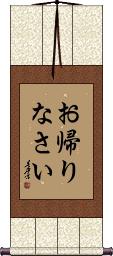
お帰りなさい is a common Japanese way to say, “welcome home.”
This is said by a person greeting another as they return home. It's a typical phrase that is almost said by reflex as part of Japanese courtesy or etiquette.
Sometimes written as 御帰りなさい (just the first character is Kanji instead of Hiragana).
Note: Because this selection contains some special Japanese Hiragana characters, it should be written by a Japanese calligrapher.
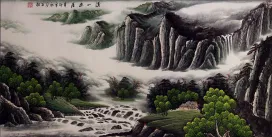
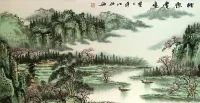
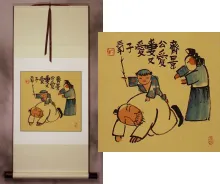
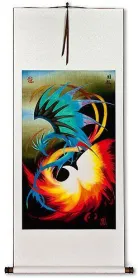
This in-stock artwork might be what you are looking for, and ships right away...

$39.88 ≈ Kč827.43



Starting at: $28.88 ≈ Kč599.20